For years, many Costa Rica vacations have been planned around a fairly familiar list: Manuel Antonio, La Fortuna, Tamarindo, Monteverde, and, increasingly, Santa Teresa. There are good reasons why these places are popular, but there is also another way to experience the country.
One that leaves more room for unhurried mornings, less crowded beaches, small local restaurants, and spontaneous detours along the way.
This style of travel is gaining momentum internationally. According to Skyscanner research conducted among 22,000 travelers, 34% say they will look for quieter destinations, while 31% plan to visit popular destinations during seasons with fewer visitors.
Costa Rica is particularly well suited to this type of trip. Instead of trying to travel across the entire country in just a few days, travelers can choose one region and explore it in greater depth.
The southern Nicoya Peninsula is an excellent example. Cóbano, Malpaís, Montezuma, and Cabuya are close enough to combine within the same route, yet each destination maintains a very different atmosphere.
Why Choose a Quieter Costa Rica?
Traveling at a slower pace does not necessarily mean finding places without visitors. In a country as internationally recognized as Costa Rica, that expectation would be unrealistic.
The key is to travel beyond the places where the largest numbers of visitors tend to concentrate.
This might mean staying in a community near a very popular destination, spending several nights in the same area instead of changing hotels every day, visiting the best-known attractions early in the morning, or choosing months with lower tourism demand.
The time of year also makes a significant difference.
In Costa Rica, the dry season generally runs from around mid-December through the end of April, while the green season extends from May through approximately mid-December.
The dry months attract more visitors. During the green season, on the other hand, there are generally fewer tourists and landscapes become much more intensely green.
May, June, and November can be particularly interesting for travelers looking for a balance between weather, nature, and fewer visitors.
For travelers who do not mind some rain and prefer a more relaxed atmosphere, this can be an excellent combination.
Cóbano: A Strategic Base for Exploring Freely
Cóbano does not have the postcard-perfect beachfront setting that has made Santa Teresa famous.
And that is precisely part of its appeal.
Located inland in the southern Nicoya Peninsula, Cóbano works very well as a starting point for travelers who want to explore different beaches and communities without necessarily staying in the areas with the highest levels of tourism activity.
From Cóbano, it is relatively easy to reach Montezuma, Santa Teresa, Cabuya, and Malpaís.
The distances are short, although in Costa Rica it is always important to remember that driving times can vary depending on road conditions, weather, and traffic.
What Type of Traveler Will Enjoy Cóbano Most?
Cóbano is particularly convenient for independent travelers who value mobility more than staying directly on the beach.
It can also be an excellent option for:
- families
- couples who want to explore several beaches
- travelers taking a road trip
- visitors planning longer stays
- travelers arriving in Cóbano on a domestic flight
- travelers who prefer to combine different destinations from a single base
Budget Rent a Car has a location at Cóbano Airport, allowing travelers to pick up a vehicle upon arrival and continue directly toward Montezuma, Santa Teresa, Malpaís, or other communities on the peninsula.
If Cóbano serves only as an arrival point, one or two nights may be enough.
However, travelers who prefer having a central base and taking day trips can stay longer.
Things to Do from Cóbano
Its location makes it possible to organize different experiences without having to travel long distances.
One day can be dedicated to Montezuma and its waterfall.
Another can take you toward Cabuya and Cabo Blanco Absolute Natural Reserve.
And another can lead toward the Pacific coast to explore Malpaís and Santa Teresa.
This flexibility is precisely one of the main advantages of car rental in Cóbano.
Instead of organizing every movement around fixed transportation schedules, travelers can adjust the day according to the weather, road conditions, or simply how much time they want to spend in each place.
Malpaís: Beach and Nature at a Slower Pace
Malpaís and Santa Teresa are frequently mentioned as though they were a single destination.
However, the experience can be quite different.
Malpaís has a more spread-out and relaxed atmosphere, with hotels, restaurants, and accommodations distributed across a wider area.
The area combines beaches, rocky sections, and natural pools, along with activities such as surfing, fishing, horseback riding, snorkeling, and other outdoor experiences.
Who Will Enjoy Malpaís Most?
Malpaís is especially appealing for:
- couples
- surfers
- photographers
- nature lovers
- travelers looking for a beach destination without too much nightlife
- people who want to stay close to Santa Teresa without being based in its busiest area
Its location makes it possible to visit Santa Teresa for restaurants, cafés, shops, or surfing and then return to a somewhat quieter environment.
For travelers in no hurry, a stay of three or four nights can be ideal.
This leaves room for a beach day, a nature activity, an afternoon dedicated to food, and, something important on any slow trip, at least one day without an overly structured itinerary.
Getting Around Malpaís
Budget also has a location in the Malpaís, Playa Carmen, and Santa Teresa area.
This makes car rental in Playa Malpaís a practical alternative for travelers who arrive using another form of transportation and later want greater independence to explore the area.
It is important to consider road conditions when selecting a vehicle.
The main routes do not automatically require a 4×4, but secondary roads, beach access roads, and entrances to certain accommodations can vary considerably.
During the rainy season, or when the itinerary includes less-developed roads, a vehicle with higher ground clearance may be convenient.
Cabuya: Slowing Down Even More
For travelers who find even beach towns a little too active, Cabuya deserves a place on the itinerary.
This small community is located between Montezuma and Cabo Blanco and maintains a much quieter atmosphere.
One of its distinctive features is Cabuya Island.
When the tide is sufficiently low, it is possible to walk there from the mainland.
The island serves as the community cemetery, so it should be visited respectfully and understood as a place of cultural importance as well.
Cabuya works particularly well for travelers interested in nature, simplicity, and tranquility.
Staying two nights allows enough time to adjust to the pace of the area and set aside a full morning to visit Cabo Blanco.
Cabo Blanco: When Nature Becomes the Focus of the Trip
Very close to Cabuya is Cabo Blanco Absolute Natural Reserve, an important conservation area located at the southern tip of the Nicoya Peninsula.
This is one of those places where it makes sense to replace the idea of “seeing as much as possible” with a slower experience.
Forest, birds, coastline, and trails make it possible to spend several hours simply observing the surroundings.
When traveling from Cóbano toward Cabuya and Cabo Blanco, it is advisable to pay attention to road conditions, especially during the rainy months.
After Montezuma, some road surfaces can become more uneven.
Montezuma: A Little More Activity Without Losing the Relaxed Pace
Montezuma sits somewhere between a peaceful retreat and an established tourist destination.
It offers restaurants, accommodations, and well-known attractions while maintaining a scale small enough to fit easily into a southern Nicoya itinerary.
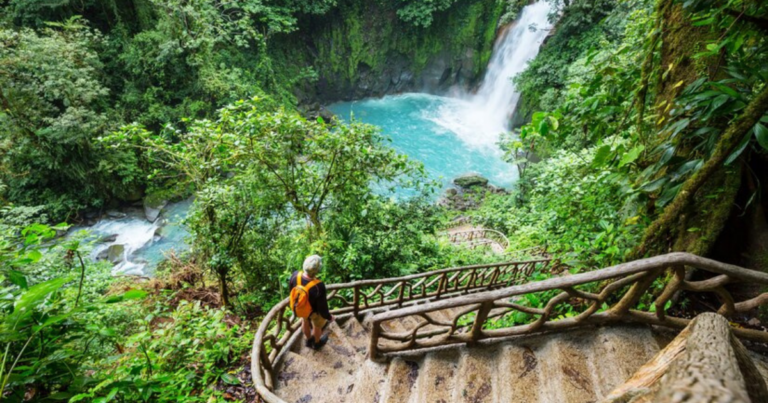
One of its best-known attractions is Montezuma Waterfall.
For travelers using Cóbano as a base, Montezuma is also one of the easiest nearby destinations to incorporate into the itinerary.
It can be visited as a day trip, or travelers can spend one or two nights there if they want to enjoy the atmosphere of the town during the afternoon and evening.
What About Santa Teresa?
Avoiding crowds does not mean removing every popular destination from the trip.
Santa Teresa can still be part of the itinerary.
The difference lies in how you visit it.
Instead of automatically making it the base for the entire stay, it can work as a half-day excursion or an afternoon outing from Malpaís or Cóbano.
This is where traveling during lower-demand seasons becomes particularly interesting.
Visiting a well-known destination during less crowded months, staying outside its busiest center, and having a vehicle to move around freely can create a completely different experience.
What Is the Best Time for a Quieter Trip?
There is no single perfect month.
The decision always involves balancing weather, visitor numbers, and road conditions.
December to April
This is the period with the driest conditions across much of the Pacific region.
It is ideal for travelers who prioritize sunny days, but it also coincides with higher concentrations of tourists.
Christmas, New Year, March, and Easter Week can see particularly high demand.
May and June
These are very interesting months for travelers who want to combine green landscapes with fewer visitors.
The rains have already begun, but there are normally still many usable periods of the day.
September and October
These months can offer very low occupancy levels in many areas of the Pacific.
However, they are also among the months with the highest probability of rain.
This can affect outdoor activities and driving conditions.
November
November is another attractive transition month.
The landscape remains very green while conditions begin to shift toward the dry season.
For a slow trip, the best time is not necessarily the month with the lowest chance of rain.
It may instead be the month that offers enough good weather while also providing more space to enjoy each place.
Rental Car or Shared Transportation?
Both options can work, but they create different travel experiences.
Shared transportation services such as Interbus connect different tourist destinations across Costa Rica and can be convenient for travelers who want to reach an accommodation and remain primarily in one area.
Travelers searching for Interbus transportation in Cóbano or Interbus transportation in Playa Malpaís should check current routes, pickup points, and schedules in advance, as these may vary.
Renting a vehicle offers a different advantage: freedom.
Having a car is particularly useful when the itinerary includes:
- small communities
- beaches located outside the main tourist centers
- early-morning activities
- restaurants located away from the accommodation
- changes of plans due to weather
- different stops within the same day
For a route connecting Cóbano, Montezuma, Cabuya, Cabo Blanco, and Malpaís, those small spontaneous decisions can become an important part of the trip.
A Relaxed 7-Day Itinerary Through the Southern Nicoya Peninsula
Day 1: Cóbano
Arrive in Cóbano, pick up your rental vehicle, and keep the first afternoon open.
Instead of immediately starting with activities, use the time to settle in, get to know the area, and rest.
Day 2: Cóbano and Montezuma
Leave early for Montezuma.
Explore the town and the waterfall area before returning to Cóbano in the afternoon.
Day 3: Cabuya
Drive toward Cabuya at an easy pace.
Settle in and spend the afternoon exploring the coast or simply relaxing.
Day 4: Cabo Blanco
Set aside the morning to explore Cabo Blanco Absolute Natural Reserve.
Keep the rest of the day free from a strict schedule.
Day 5: Malpaís
Continue toward the Pacific coast.
Stop for lunch along the way and arrive in Malpaís with enough time to enjoy the sunset.
Day 6: Malpaís and Santa Teresa
Spend the day surfing, at the beach, or simply relaxing.
Another option is to visit Santa Teresa for a few hours and return to Malpaís afterward.
Day 7: Malpaís or Cóbano
Enjoy one final peaceful morning before continuing toward another destination in the country or returning the vehicle.
The purpose of this itinerary is to avoid scheduling three or four activities every day.
On a relaxed trip through Costa Rica, leaving room for an unexpected stop, a long lunch, or a change of plans caused by the rain can be part of the experience.
Driving Through the Southern Nicoya Peninsula
Short distances can be misleading in Costa Rica.
A destination located only 15 kilometers away can take longer to reach than expected because of road conditions, traffic, weather, or the final access road to a hotel.
As a reference, Montezuma, Malpaís, Santa Teresa, and Cabuya can all be reached relatively quickly from Cóbano.
Even so, travel times should always be considered approximate.
For travelers arriving from the Central Valley, another option is to take the ferry between Puntarenas and Paquera and then continue by vehicle from Paquera toward Cóbano and the rest of the peninsula.
Travelers should check current schedules before organizing the route.
Traveling More Slowly Makes Costa Rica Feel Bigger
Costa Rica does not need to be experienced as a checklist of places to tick off one by one.
Choosing Cóbano instead of one of the main tourist centers, spending several days in Malpaís, waking up near Cabuya, or visiting a popular beach during a quieter season changes the experience in subtle ways.
There is less pressure to reach the next attraction.
And more time to discover everything that exists between one place and another.
That is perhaps the greatest advantage of traveling away from the crowds: it is not simply about finding an empty beach, but about having enough freedom and time to experience each destination at its own pace.
With our locations in Cóbano and Malpaís, travelers can choose a vehicle suited to the route they want to explore and design a southern Nicoya Peninsula itinerary according to their own schedule.
Before traveling, check road conditions, consider seasonal conditions, and book in advance when visiting the area during periods of high demand.
Ready to discover Costa Rica at a different pace?
Reserve your car with Budget, choose the vehicle that best suits your route, and leave a little space in the itinerary for those places you never planned to find.