One of the first questions that comes up when planning a trip to Costa Rica is what type of vehicle to rent. Is booking a 4×4 essential? Will a sedan be enough? Is it worth choosing an SUV even if your itinerary mainly includes paved roads?
The answer depends less on Costa Rica as a whole and more on three factors: the destinations you plan to visit, the time of year, and the type of trip you want to take.
Costa Rica has paved national highways connecting its main cities and tourist destinations. However, some beaches, rural accommodations, nature reserves, and mountain communities are located at the end of gravel roads, steep routes, or surfaces that may deteriorate during the rainy season.
For this reason, not every traveler needs a 4×4, but choosing one can provide greater comfort, ground clearance, and traction on certain routes.
So, Do You Need a 4×4 to Travel Around Costa Rica?
Not necessarily, but it is recommended.
A sedan or compact car is usually sufficient when the itinerary is focused on cities, paved national highways, and easily accessible tourist destinations such as San José, Alajuela, La Fortuna, or the main communities in Guanacaste.
However, a 4×4 vehicle is always an excellent choice to ensure you are prepared for any route you may wish to take. For example
- Unpaved rural roads.
- Steep inclines.
- Accommodations located far from urban centers.
- Gravel roads that may become muddy or uneven.
- Coastal destinations on the Nicoya Peninsula during the rainy season.
- Trips with bulky luggage or sports equipment.
- Mountain routes where greater ground clearance is preferable.
The key is to review the entire itinerary, not only the main destination. A town may be accessible by a road in good condition, while the final section leading to a villa, farm, or hotel may require a higher vehicle.
Costa Rica generally has a dry season, which runs approximately from mid-December through late April, and a green or rainy season, from May through mid-December. However, conditions vary by region because of altitude and the country’s different microclimates.
Differences Between a Sedan, an SUV, and a 4×4
Before booking, it is helpful to understand what each vehicle category offers. You can explore the available options in our vehicle fleet.
1. Sedan or Compact Car
Compact cars and sedans are usually the most affordable and fuel-efficient alternatives for traveling on paved roads. They are suitable for couples, solo travelers, or small families with a moderate amount of luggage.
They may work well for:
- San José and the Central Valley.
- Alajuela and Heredia.
- La Fortuna using the main routes.
- Tamarindo using conventional roads.
- Jacó and Manuel Antonio.
- Transportation between the airport and urban areas.
- Itineraries that mainly follow paved roads.
They also tend to consume less fuel than larger vehicles and may be easier to park in cities and busy towns. Their main limitation is lower ground clearance. On roads with rocks, ditches, or deep potholes, a sedan requires slower driving and may not be the most appropriate alternative.
2. Two-Wheel-Drive SUV
A two-wheel-drive SUV offers a higher driving position, more interior space, and, in many models, better ground clearance than a sedan.
It is a good option for:
- Families traveling with several suitcases.
- Long trips on national highways.
- Accessible destinations that include some gravel roads in reasonable condition.
- Drivers who prefer more space without needing four-wheel drive.
- Routes combining cities, volcanoes, and easily accessible beaches.
It is important to remember that a higher vehicle is not necessarily a 4×4. Additional height helps when driving over uneven surfaces, but two-wheel drive does not provide the same support on mud, loose gravel, or difficult inclines.
3. 4×4 SUV
A 4×4 distributes engine power to all four wheels, which may improve traction on slippery surfaces, inclines, and rural roads.
It may be the best alternative for:
- Monteverde, depending on the route, accommodation, and season.
- Santa Teresa and Malpaís during the rainy season.
- Rural areas of the Nicoya Peninsula.
- Farms, villas, or remote accommodations.
- Surf trips involving equipment and travel between different beaches.
- Groups visiting several regions with different road conditions.
- Mountain routes or deteriorated gravel roads.

What Vehicle Do You Need for Costa Rica’s Most Popular Destinations?
1. Tamarindo
Tamarindo is one of the most accessible coastal destinations in Guanacaste. Travelers arriving from Guanacaste International Airport and using the main routes can usually reach the area in a sedan or two-wheel-drive SUV.
A 4×4 may be convenient when the itinerary includes accommodations located along rural roads, visits during months of heavy rain, or travel with surfboards and bulky luggage.
For a vacation focused on Tamarindo and its most accessible surroundings, a sedan can provide a good combination of comfort and savings. To explore rural areas or several beaches, a higher vehicle offers greater flexibility.
2. Santa Teresa and Malpaís: A 4×4 Is Recommended During the Rainy Season
Santa Teresa and Malpaís are located on the Nicoya Peninsula, a region where the final parts of the journey may include unpaved roads, dust during the dry season, and mud or deteriorated surfaces during the green season.
In dry conditions and when following the main routes, some drivers reach these destinations in two-wheel-drive vehicles. However, a 4×4 is a sensible choice during the rainy season or when the accommodation is located on a hill or along a secondary road.
Budget Rent a Car has an office in the Malpaís area, which may be convenient for travelers who want to explore this part of the Pacific coast with greater independence.
3. Monteverde: It Depends on the Route and Time of Year
Monteverde is one of the destinations that creates the most uncertainty. Access has improved, but conditions may vary according to the selected route, the weather, and the exact location of the accommodation.
An SUV may be sufficient when using the recommended main route, the weather has been stable, the hotel is located near the town center, and no trips to rural properties are planned.
A 4×4, on the other hand, is recommended when traveling during the rainy season, staying outside the central area, visiting farms, reserves, or activities reached by secondary roads, or when the driver prefers greater traction on inclines and gravel surfaces.
4. La Fortuna: Usually Accessible With Any Vehicle Category
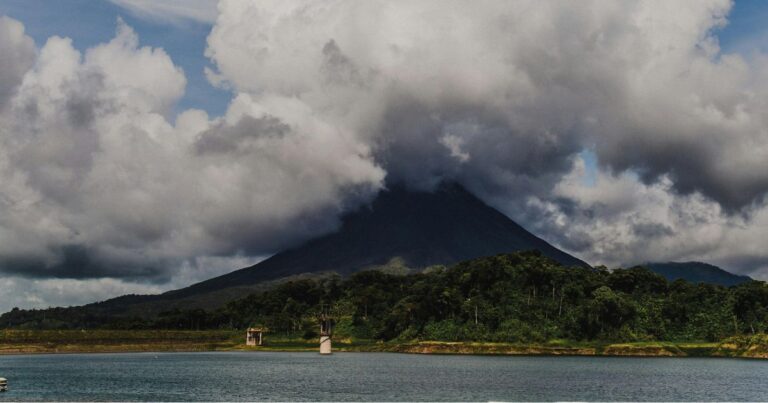
La Fortuna and the Arenal Volcano area are generally accessible by paved roads from San José, Alajuela, and Guanacaste. For a visit to downtown La Fortuna and the best-known attractions, a sedan is usually sufficient.
An SUV may be more comfortable for families, groups with luggage, or travelers staying outside the town center. A 4×4 becomes more useful when the trip also includes Monteverde, Río Celeste, rural roads, or remote properties. In other words, La Fortuna alone does not usually justify renting a 4×4. The rest of the itinerary may make it advisable.
5. Osa Peninsula: Evaluate Each Section of the Journey
The Osa Peninsula requires more careful planning. Some areas are accessible by road, while others require boat transportation, coordination with the accommodation, or travel along rural routes.
Before booking your vehicle, confirm:
- The exact point up to which you can drive.
- The directions provided by the accommodation.
- Whether secure parking is available.
- The expected conditions during your travel dates.
- Whether any section may close or become difficult because of rainfall.
In this region, a 4×4 may be useful, but it does not replace proper planning or make every road accessible.
6. Naranjo and Murciélago Beaches in Guanacaste
Some destinations are subject to specific recommendations or restrictions from local authorities. At Santa Rosa National Park, for example, vehicle access to certain areas may be prohibited during the rainy season, while 4×4 vehicles are recommended outside that period. This example demonstrates why four-wheel drive does not guarantee access. Park instructions, weather conditions, and official closures always take priority.
The Best Vehicle According to the Type of Trip
1. For Couples Visiting Accessible Destinations
A compact car or sedan may be sufficient for an itinerary such as: San José – La Fortuna – Jacó – Manuel Antonio – San José.
This category makes parking easier, offers good fuel efficiency, and may result in a lower rental cost.
2. For Families
For a family, the decision should not focus exclusively on the number of seats. It is also important to consider the actual space available for suitcases, a stroller, beach equipment, and other belongings. An SUV is appropriate for a family of four or five. A larger model may be necessary for bigger groups or travelers carrying several full-size suitcases.
At Budget Costa Rica, you will find vehicle categories that include sedans, two-wheel-drive SUVs, and 4×4 models for five or seven passengers. Availability and the specific model depend on the rental date and location.
3. For Surf Trips
Surfers often benefit from a higher and more spacious vehicle, especially when visiting several beaches. Before booking, consider:
- The size and number of surfboards.
- Trunk capacity.
- The distance between beaches.
- The condition of secondary roads.
- The season in which you will be traveling.
4. For Travelers Staying in Cities
A compact car is generally the most practical option for San José, Alajuela, Heredia, and Cartago. Its size makes urban driving and parking easier. There is little reason to pay for a 4×4 if most of the trip will take place on paved roads and in urban areas.
Is a High-Clearance Vehicle the Same as a 4×4?
No. This difference can cause confusion during the booking process.
A two-wheel-drive SUV may offer good ground clearance, but it only powers two wheels. A 4×4 provides traction through all four wheels.
For dry gravel roads in reasonable condition, ground clearance may be more important than traction. For mud, loose gravel, steep inclines, or slippery surfaces, additional traction can make a significant difference.
For this reason, the best choice is not always the largest vehicle. It is the vehicle that best matches the planned route.
Which Airport Is Best for Renting a Car?
Car Rental at Juan Santamaría International Airport
Juan Santamaría International Airport is a convenient gateway for itineraries beginning in San José, the Central Valley, La Fortuna, the Caribbean, or the Central Pacific.
Picking up your vehicle at the airport allows you to begin your journey without depending on transfers between cities. Budget Costa Rica has an airport location, and booking online is simple.
Car Rental at Guanacaste International Airport
Guanacaste International Airport is particularly convenient for trips to the North Pacific, Tamarindo, Flamingo, the Gulf of Papagayo, and other beaches in Guanacaste.
Budget has a location at Guanacaste International Airport, allowing you to begin your journey through this region more comfortably. Remember that a sedan or SUV is usually sufficient for resorts and communities connected by main roads. A 4×4 is more advisable for accessing rural properties or traveling during the rainier months.
Checklist for Choosing the Right Vehicle
Before making your reservation, answer the following questions:
- Will you travel during the dry or rainy season?
- Are all destinations connected by paved roads?
- Is any accommodation located on a mountain or rural road?
- Will you visit Monteverde, Santa Teresa, Malpaís, or remote areas of Guanacaste?
- How many people will be traveling?
- How many suitcases will you carry?
- Will you bring surfboards, a stroller, or other equipment?
- Will you be driving for several days?
- Do you prefer better fuel efficiency or more space and ground clearance?
- Does the accommodation specifically recommend a 4×4?
If most of your route will be paved and urban, you probably do not need four-wheel drive. If you will combine mountains, remote beaches, and rural roads, a 4×4 may be a worthwhile investment.
Reserve the Right Vehicle With Budget Rent a Car Costa Rica
Renting a car allows you to explore beaches, volcanoes, national parks, and rural communities with greater freedom.
Costa Rica’s official tourism website also indicates that renting a vehicle can be a convenient option for travelers who want to explore beyond the main cities, particularly when visiting beaches, rainforests, and national parks.
At Budget Rent a Car Costa Rica, we have locations near international airports and in different areas throughout the country. We invite you to explore the available options and reserve the right vehicle in advance, so you can travel around Costa Rica with comfort, flexibility, and confidence.